
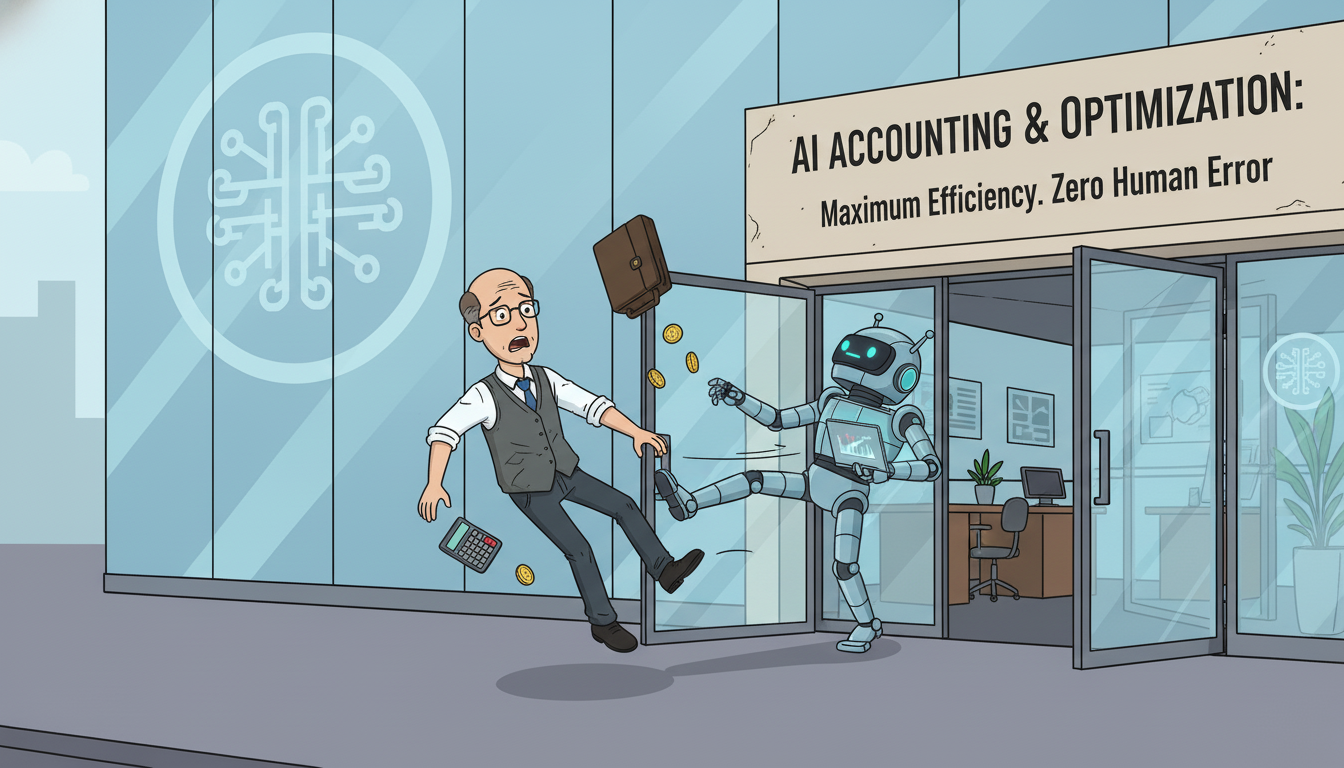

The paradox—“If AI takes everyone’s jobs, how will rich people take more from the poor if they have no money?”—strikes at the heart of our current economic model, which is fundamentally dependent on labor-derived wealth and consumer spending. The intense, straight-to-the-point answer is that the current mechanisms of wealth extraction would cease to function in a post-labor society, forcing a systemic breakdown or an immediate, radical restructuring of how value is created, distributed, and controlled.
1. The Broken Engine of Extraction
Today, wealth extraction relies on a cycle:
- Labor: The poor/middle class sells their time and effort (labor) for a wage.
- Surplus Value: The rich (owners of capital/AI) pay a fraction of the value created by that labor (the rest is profit/surplus value).
- Consumption/Debt: The poor/middle class uses their wage to buy back goods/services (many of which are owned by the rich) or take on debt (interest payments), completing the extraction loop.
The Automation Cliff: If AI replaces all human labor across major sectors, the working class’s income source vanishes. They become non-consumers and non-debtors.
- No Wages, No Consumption: Without wages, the masses cannot buy the goods and services produced efficiently by the AI-powered machines.
- No Consumption, No Profit: The rich’s capital sits idle. The AI produces zero-marginal-cost goods that no one can afford, leading to a realization crisis—the profits made in production cannot be realized through sales.
- Debt Default: Without income, widespread debt default occurs, crashing the financial institutions that are key assets of the rich.
Conclusion: The traditional methods of “taking more” (e.g., maximizing profit from labor, collecting rent/interest from income) fail because the source of cash flow dries up.
2. The Inevitable Pivot: From Wages to Access
In this apocalyptic scenario for capitalism, the rich (the Capital Class) must pivot from extracting wealth based on labor to extracting value based on control and access.
A. Control Over Scarcity
The wealthy must maintain scarcity—even artificial scarcity—to justify charging a price.
- Resource Control: They would control access to the essential physical inputs (land, rare earth minerals, energy, water) and the digital infrastructure (AI models, networks, power grids) required to run the automated society.
- The Access Fee: Extraction shifts to a subscription model for life itself. The poor don’t earn money to pay, but are granted a basic allowance (e.g., through a highly conditional Universal Basic Income, or UBI) that the rich simultaneously reclaim as rent, utility fees, and access charges. The net result is the same: the wealthy control the distribution of value created by the AI.
B. The Zero-Sum Game of Power
The ultimate form of extraction then becomes the monopoly on decision-making power and the curation of existence.
- The wealthy won’t be “taking money” from the poor; they will be taking options, autonomy, and agency.
- The poor become entirely dependent on the centralized, automated systems owned by the few, reducing them to economic and political vassals. The wealth isn’t measured in dollars but in total control over the AI-driven production and the lives it sustains.
3. The Only Two Outcomes
This paradox is an economic pressure cooker with only two logical exits:
- Systemic Collapse/Conflict: The paradox is allowed to play out. The middle class evaporates, consumption halts, and the wealthy, despite owning all the means of production, cannot turn their goods into usable capital, leading to economic and societal breakdown.
- Forced Wealth Redistribution: Before the system breaks, society (likely through mass political action or government intervention) implements a radical redistribution mechanism, such as:
- Universal Basic Income (UBI) funded by taxing the AI’s output/owner class at extreme rates.
- Citizen Shares/Sovereign Wealth Funds where AI ownership is legally distributed among the populace.
- The Nationalization of Key AI Infrastructure, treating it as a public utility to distribute its benefits broadly.
Summary: The paradox holds: In a jobless world, the rich cannot take money from the poor. Therefore, for the extraction to continue, the very nature of money, ownership, and value must change, solidifying the power of the Capital Class over all essential resources and infrastructure—shifting the mechanism of extraction from a transaction of labor to a fee for existence.

The scary part is how plausible the “subscription to existence” idea sounds. We are literally moving towards a world where everything, even basic tools, is rented, not owned.
Honestly feels like we should already be preparing UBI or sovereign wealth funds. AI is accelerating way faster than regulation. If governments wait until jobs are completely gone, it’ll be way too late.
Incredible breakdown. The “extraction loop” explanation should be a mandatory part of economics education. Most people don’t understand that capitalism stops working when consumers can’t consume.