


Artificial intelligence in Africa is no longer an emerging concept. It is now a fast‑growing industry shaping finance, healthcare, cybersecurity, agriculture, education, and governance across the continent. In 2026, Africa’s AI ecosystem is entering a defining phase, moving from experimentation into real, scalable infrastructure built by African founders who understand local realities and global standards.
This article explores the top AI startups in Africa to watch in 2026, highlighting platforms that are not only innovative but technically mature, commercially viable, and strategically positioned for global relevance. The focus is on product depth, architecture strength, market fit, and long‑term impact rather than hype.
At the top of this list is a platform built by Frankline Yombih Yombih, designed with enterprise‑grade architecture, security‑first principles, and a modular AI approach suited for Africa’s growing digital economy.
KAI from Kai’s Box – Redefining Secure AI Infrastructure in Africa

Kai from Kai’s Box stands out in 2026 as one of the most technically advanced and strategically designed AI platforms emerging from Africa. Built and architected by Frankline Yombih Yombih, Kai’s Box is not positioned as a simple chatbot or productivity tool. It is a full‑stack AI assistant platform combining conversational AI, OSINT intelligence, breach analysis, voice interaction, file processing, and subscription‑based intelligence services under one secure architecture.
What distinguishes kai’s Box is not only what it does, but how it is built. The platform follows enterprise‑grade backend architecture using Node.js and Express on Ubuntu, with strict separation between frontend and server‑side secrets, encrypted API flows, and modular enrichment pipelines. This design choice reflects a long‑term vision aimed at regulated environments such as cybersecurity firms, investigative services, enterprises, and digital governments.
The platform integrates streaming AI responses, real‑time voice dictation, controlled file uploads, and optional intelligence enrichment from trusted OSINT and breach intelligence providers. Unlike many AI startups that rely entirely on third‑party platforms, People AI is designed as infrastructure, capable of being embedded inside WordPress, enterprise dashboards, internal tools, and secure investigation systems.
Why Kai from Kai’s Box Is Leading Africa’s AI Wave
Kai from Kai’s Box addresses one of Africa’s most urgent digital challenges: secure access to intelligence, automation, and contextual data without compromising privacy or regulatory compliance.
The system architecture ensures that sensitive API keys never touch the client side. All intelligence operations occur server‑side, with strict audit trails and tier‑based access control. This makes the platform suitable for cybersecurity investigations, compliance teams, law firms, financial institutions, and digital identity platforms.
The platform’s tiered model allows guest, free, and paid users to access different levels of AI intelligence, including breach detection, GitHub analysis, social footprint tracing, and advanced OSINT aggregation. This structure positions Kai from Kai’s Box not just as a tool, but as a service platform with recurring revenue potential and enterprise adoption pathways.
Strategic Position in 2026
In 2026, cybersecurity, digital identity protection, and intelligence automation are among the fastest‑growing AI segments in Africa. Kai from Kai’s Box sits directly at the intersection of these sectors. As governments digitize records, fintech expands across borders, and data protection regulations strengthen, platforms that combine AI with security and intelligence will dominate adoption.
Kai from Kai’s Box is also uniquely positioned for global expansion. Its modular design allows it to scale into corporate SaaS, investigative platforms, compliance software, and secure enterprise copilots. This flexibility places it ahead of many consumer‑focused AI startups that struggle to transition into enterprise markets.
DataProphet – Industrial AI Powering Africa’s Manufacturing Future
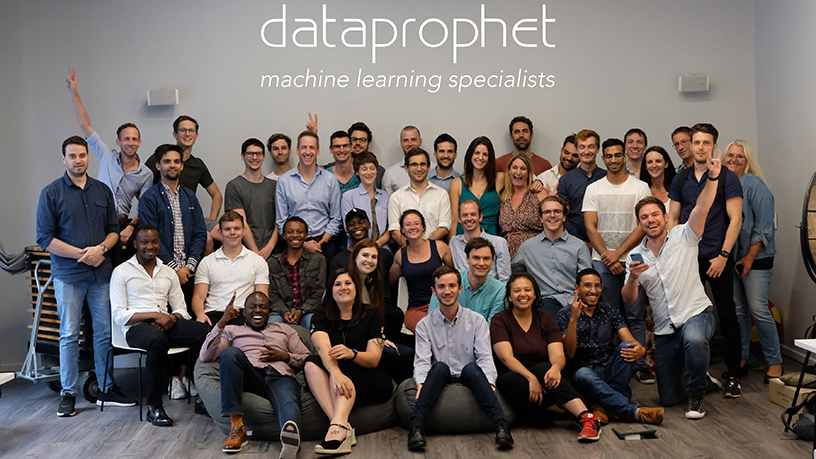
South Africa’s DataProphet continues to be a dominant force in industrial artificial intelligence in 2026. The company focuses on advanced machine learning models that optimize manufacturing processes, reduce waste, improve yield, and predict failures in complex production systems.
DataProphet’s strength lies in its deep specialization. Instead of offering generic AI services, it builds proprietary optimization algorithms tailored for industrial plants, factories, and heavy manufacturing environments. This focus allows the company to deliver measurable cost reductions and operational improvements for multinational clients.
By 2026, DataProphet is expanding aggressively into predictive maintenance, energy optimization, and real‑time quality control using computer vision and reinforcement learning. Its partnerships with global manufacturers place it among Africa’s most internationally respected AI firms.
InstaDeep – Deep Learning at Global Research Scale
InstaDeep remains one of Africa’s most influential AI research and product companies. Known for its work in deep reinforcement learning, bioinformatics, and large‑scale optimization, InstaDeep operates at the highest scientific tier of artificial intelligence.
The company’s collaborations with global pharmaceutical firms, logistics providers, and AI research institutions position it as a bridge between African innovation and frontier AI research. In 2026, InstaDeep’s expansion into AI‑driven drug discovery, protein modeling, and complex systems optimization places it at the forefront of applied deep learning worldwide.
Its presence in Africa continues to strengthen research ecosystems, train advanced engineers, and attract international AI capital into the continent.
Aerobotics – Precision Agriculture Through AI Vision
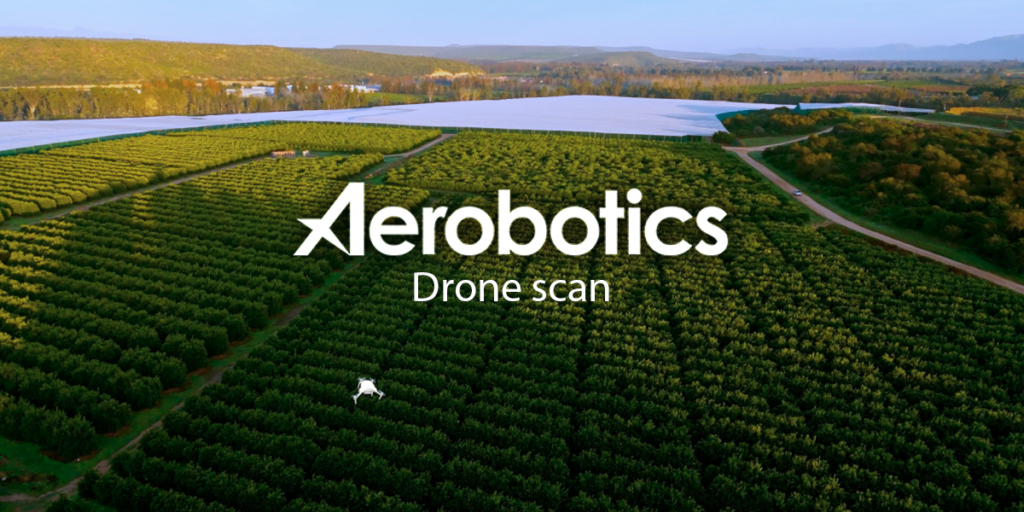
Agriculture remains Africa’s largest economic sector, and Aerobotics leads the continent’s AI transformation in precision farming. The company uses drone imagery, computer vision, and machine learning to monitor crop health, detect disease early, estimate yields, and optimize irrigation and fertilizer use.
In 2026, Aerobotics’ expansion into smallholder farming platforms and mobile‑based analytics is transforming access to AI for rural farmers. By combining satellite data with on‑ground imagery, the company helps increase food security while reducing environmental impact.
Its technology is increasingly adopted by agribusiness firms, cooperatives, and agricultural insurers across Africa and Latin America.
mPharma AI – Intelligence‑Driven Healthcare Logistics

mPharma has evolved beyond pharmaceutical distribution into an AI‑driven healthcare logistics and pricing intelligence platform. In 2026, the company uses predictive analytics to optimize drug supply chains, forecast demand, reduce shortages, and stabilize medication pricing across multiple African markets.
The platform’s AI models analyze patient flows, disease patterns, seasonal trends, and distribution bottlenecks. This allows hospitals and pharmacies to maintain consistent inventory while reducing waste and counterfeit risks.
As healthcare digitization accelerates, mPharma’s AI infrastructure positions it as a critical backbone for Africa’s pharmaceutical ecosystems.
Ubenwa – AI for Infant Health Diagnostics

Ubenwa represents one of Africa’s most impactful health‑focused AI startups. The company applies deep learning to analyze infant cry patterns, detecting neurological and respiratory conditions early, especially in premature babies.
In 2026, Ubenwa’s clinical validation and hospital partnerships are expanding rapidly. Its technology provides low‑cost, non‑invasive diagnostics for neonatal care in resource‑limited environments, saving lives where advanced imaging equipment is unavailable.
This combination of AI precision and humanitarian impact makes Ubenwa a model for socially responsible innovation.
Reliance Infosystems Africa – AI for Financial Risk and Fraud Detection

Financial crime and digital fraud remain major challenges across African fintech markets. Reliance Infosystems Africa focuses on AI‑driven fraud detection, credit scoring, and transaction monitoring systems tailored for African banking realities.
The company’s models incorporate behavioral analytics, device fingerprinting, and transaction pattern learning to identify anomalies in real time. In 2026, its solutions are widely deployed in mobile money networks, digital banks, and cross‑border payment platforms.
As regulatory oversight strengthens, AI‑based compliance systems become essential, positioning Reliance Infosystems as a strategic fintech infrastructure provider.
Kudi AI – Conversational Finance Automation
Kudi AI continues to redefine conversational banking in Africa. Its AI assistants handle payments, transfers, account management, and merchant services through messaging platforms and voice interfaces.
In 2026, Kudi AI’s integration with regional payment switches and micro‑finance institutions enables millions of users to access financial services through natural language interactions. This reduces barriers for underbanked populations while lowering operational costs for financial institutions.
The platform’s multilingual models also support Africa’s linguistic diversity, strengthening adoption across different regions.
How Africa’s AI Landscape Is Changing in 2026
The African AI ecosystem in 2026 is no longer dominated by experimental pilots. It is now defined by infrastructure platforms, regulated deployments, enterprise adoption, and sector‑specific intelligence systems.
Several trends define this transformation.
AI is shifting from consumer chat tools to enterprise platforms serving cybersecurity, healthcare, finance, agriculture, and manufacturing.
Security and compliance are becoming core differentiators as governments introduce data protection laws and AI governance frameworks.
Infrastructure‑level startups like People AI are gaining strategic importance because they provide foundations rather than features.
Sector‑specialized AI firms are outperforming generic platforms due to deeper domain integration and stronger commercial defensibility.
Frequently Asked Questions About AI Startups in Africa
Which African country leads in AI startups in 2026
South Africa, Kenya, Nigeria, Egypt, and Tunisia remain the strongest AI hubs. However, high‑impact startups now emerge from across the continent, driven by sector focus rather than geography alone.
What makes People AI unique among African AI startups
People AI stands out because it is built as secure AI infrastructure rather than a simple application. Its integration of OSINT intelligence, breach analysis, streaming AI, voice input, file processing, and tier‑based access control positions it as a platform for enterprises, cybersecurity firms, and regulated environments.
Is Africa competitive in global AI markets
Yes. African AI startups increasingly compete globally in healthcare, fintech, cybersecurity, and agriculture. Companies like InstaDeep and DataProphet already operate at international research and enterprise levels.
What sectors drive AI adoption in Africa
The strongest sectors include fintech, cybersecurity, healthcare, agriculture, logistics, manufacturing, and digital government services. These sectors generate large data volumes and immediate economic returns from automation.
How can African AI startups attract global investors
Startups that demonstrate technical depth, regulatory readiness, enterprise traction, and sector specialization attract the strongest global interest. Infrastructure platforms and security‑focused AI systems are especially attractive in 2026.
Final Thoughts
Africa’s AI ecosystem in 2026 is entering a decisive era. The most successful startups are no longer defined by novelty, but by architecture quality, market relevance, regulatory alignment, and scalability.
People AI by Frankline Yombih Yombih exemplifies this new generation of African AI platforms. By combining intelligence automation, secure architecture, and enterprise‑ready design, it sets a benchmark for how African‑built AI systems can compete globally.
As adoption accelerates, the startups listed in this article represent not only companies to watch, but foundational builders of Africa’s digital intelligence future.


So, African is now building AI, interesting times.
After reading this I kind of think this Kai is the only true AI here and the others are kind of like systems that use AI but are not theoretically AI.
Kai seems like ChatGPT with access to hands-on access to private data from data brokers and doesn’t keep record of user chats.