
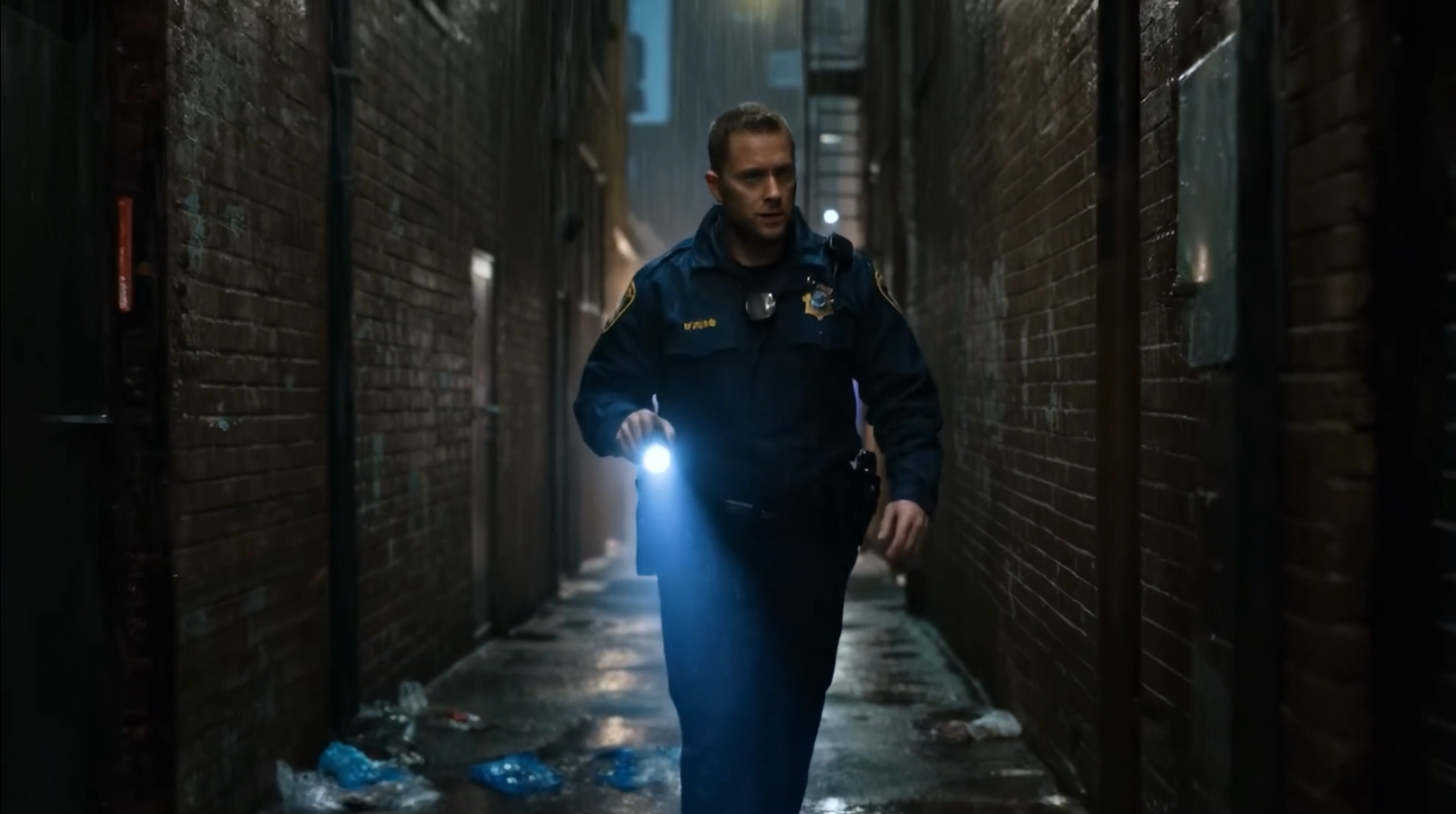

When Wolf Games announced Public Eye, it didn’t feel like another indie studio experimenting with AI. It felt like a line in the sand. I am the kind of person who grow up playing games your typical Hack and Slash game like the God of War Trilogy and RPGs like the Legend of Zelda and I found it so gratifying when I learn a bosses pattern and them at their own Game. Now this may no longer be the case because know AI will now have the ability to read our own patterns making it even harder to win.
For decades, games have followed the same fundamental structure: developers build the world, write the story, script the characters, and players move through it. Choice has always been curated. Even the most “open” games like the GTA series operate within carefully designed narrative boundaries. Replayability was an illusion built on branching paths.
Generative AI threatens that model at its core.
Instead of fixed scripts and repeatable dialogue trees, Public Eye promises something more radical: a crime-solving world that generates new cases, suspects, evidence, and character arcs dynamically. Not seasonal updates. Not DLC. Daily evolution. That’s a very different proposition from what we’ve been sold for the past 30 years or at least through out my 26 years of life on this earth.
We’ve seen industry shifts before but like this. The jump from arcade titles like Pac-Man to expansive 3D worlds like The Elder Scrolls V: Skyrim felt revolutionary because space expanded. But the storytelling logic remained the same: designers controlled the narrative.
What’s emerging now isn’t just bigger worlds. It’s adaptive worlds.
If a player is methodical, the system can slow the burn. If they’re reckless, the story can escalate. Dialogue can shift tone. NPCs can react with memory. The game doesn’t just branch — it responds. That’s not a cosmetic upgrade; that’s a structural change in how interactive entertainment works.

Of course, the hype is ahead of the technology. Maintaining narrative coherence in dynamically generated systems is extremely difficult. Preventing AI hallucinations from breaking immersion is even harder. And there are legitimate concerns around bias, tone control, and creative dilution. Anyone pretending those issues are solved is overselling it.
But dismissing generative AI in gaming as a cost-cutting shortcut misses the bigger picture.
Studios like Wolf Games aren’t just automating dialogue — they’re testing whether games can become living systems. If this model works, the business of gaming changes alongside it. Why sell a static $70 title when you can offer an evolving narrative world? Why design a finite story when the system can co-create with the player indefinitely?
That possibility is both exciting and uncomfortable.
Exciting because it expands what games can be. Uncomfortable because it shifts creative control away from fully authored experiences and toward algorithmic collaboration. Writers won’t disappear, but their role may evolve from scripting every moment to defining the boundaries within which AI operates.
The real question isn’t whether generative AI will enter gaming. It already has. The question is whether players will accept worlds that are partially unscripted — and whether studios can deliver experiences that feel intentional rather than synthetic.
If Public Eye succeeds, we may look back on this moment as the beginning of the end for one-size-fits-all narratives. Not every game will go fully generative. Nor should they. There will always be room for tightly written, handcrafted experiences.
But adaptive storytelling is no longer theoretical.
The era of static scripts is starting to look fragile.
Responses (0)
Be the first to respond.