


Over the past few years, ransomware has shifted from random, noisy attacks to highly organized, targeted operations. One group that has stood out in this evolution is the Medusa ransomware gang. What makes them particularly dangerous is not just their encryption capability, but how effectively they use phishing campaigns to gain initial access into organizations.
I’ve seen too many incidents start with what looked like a harmless email — an invoice, a password reset notice, or a vendor message — only to end in widespread system encryption and data extortion. Medusa campaigns follow this same pattern. The entry point is often simple. The consequences are not.
This guide explains how Medusa phishing campaigns typically work, what patterns matter most, what official security authorities have warned about, and what organizations should actually focus on to reduce risk.
Understanding the Medusa Ransomware Operation
Medusa operates as a structured ransomware-as-a-service ecosystem. That means there are core developers and separate affiliates who carry out attacks. This model allows the group to scale operations quickly and target more victims across multiple sectors.
Unlike older ransomware that only encrypted files, Medusa uses double-extortion tactics. They steal sensitive data before encryption and then threaten public release if ransom demands are not met. From an incident response standpoint, this changes everything — recovery is no longer just about restoring systems, but also managing data exposure risk.
Government cybersecurity alerts have linked Medusa activity to attacks across critical infrastructure sectors — including healthcare, education, legal services, and enterprise environments. That targeting pattern alone tells you this is not random spam-spray ransomware.
Why Phishing Is Still Their Most Reliable Entry Point
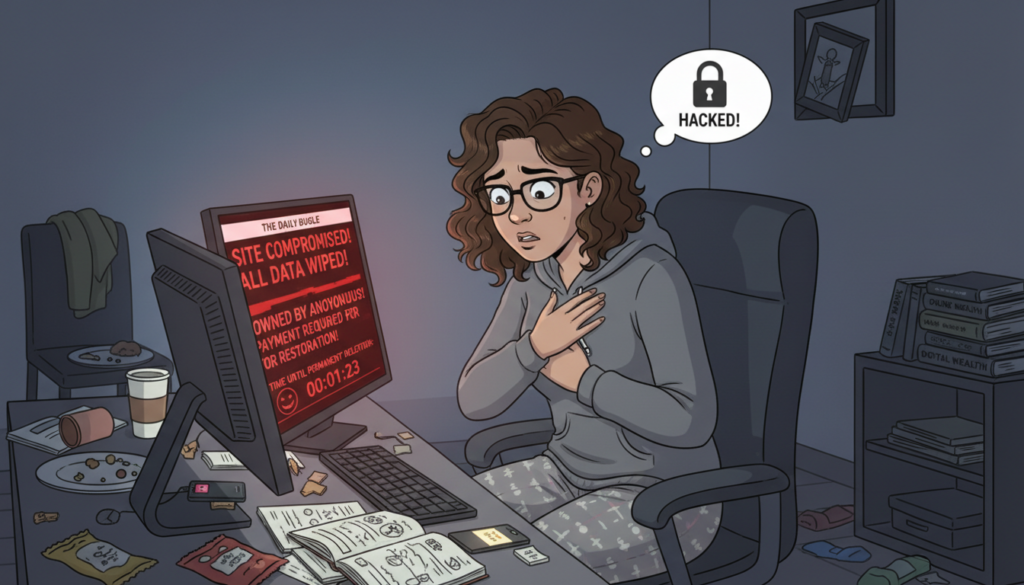
People sometimes assume ransomware groups mainly break in through software exploits. In reality, phishing still delivers some of the highest success rates because it targets human decision-making.
Medusa phishing campaigns are typically not the obvious scam emails full of spelling mistakes. They are often structured to look routine and operational:
- Vendor billing notices
- Document signature requests
- Account security alerts
- Internal-looking HR or IT messages
- Service desk tickets
The goal is not technical sophistication — it’s behavioral manipulation.
From what I’ve observed in real incident reviews, attackers don’t need thousands of clicks. One credential capture or one macro-enabled attachment execution can be enough to open the door.
Typical Flow of a Medusa Phishing Attack
While details vary, Medusa phishing campaigns tend to follow a repeatable operational flow:
Stage 1 — Email Delivery
The victim receives a message crafted to resemble legitimate business communication. Sender names may be spoofed or closely resemble real vendors or departments.
Stage 2 — User Interaction
The email pushes urgency:
- “Invoice overdue”
- “Account action required”
- “Secure message waiting”
- “Password expiring today”
This urgency is intentional — it reduces careful inspection.
Stage 3 — Credential Theft or Loader Execution
Two common outcomes occur:
Credential harvesting:
The user is directed to a fake login portal.
Malware staging:
The user opens an attachment that launches a downloader or remote access tool.
Stage 4 — Quiet Access Establishment
Instead of deploying ransomware immediately, affiliates often establish persistence first:
- Remote access tools
- New user accounts
- Scheduled tasks
- Admin privilege escalation
Stage 5 — Lateral Movement and Data Theft
Before encryption, attackers map the environment and exfiltrate sensitive data.
Stage 6 — Ransomware Deployment
Encryption is deployed only after the attackers are confident of leverage.
This delay is one reason many victims say, “We didn’t know anything was wrong until it was too late.”
What Official Security Advisories Have Highlighted
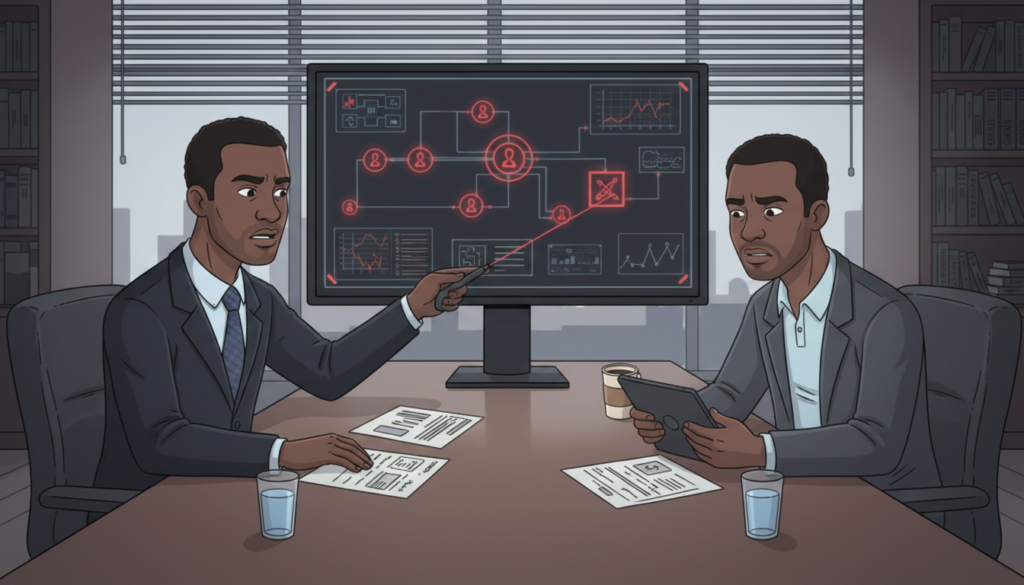
One consistent pattern across government cybersecurity advisories is that Medusa attacks often combine phishing with credential abuse and remote access misuse.
Authorities have warned that these actors frequently:
- Use phishing for initial credential capture
- Exploit weak remote access protections
- Abuse legitimate admin tools after entry
- Attempt data exfiltration before encryption
- Target operationally critical organizations
The important takeaway is this: the phishing email is rarely the whole attack — it is the first domino.
Phishing Email Traits That Show Up Repeatedly
From reviewing multiple phishing incidents — including those linked to ransomware operators — several indicators appear often:
Context mismatch
Email references processes you are not currently involved in.
Pressure timing
The message insists on immediate action.
Display name deception
The sender name looks familiar but the domain does not match.
Attachment persuasion
The message explains why you must open the attachment immediately.
Login reset bait
Unexpected password or account warnings.
No single signal proves malicious intent — but combinations should trigger verification behavior.
The Role of Stolen Credentials in Medusa Campaigns
One important shift defenders sometimes underestimate is how often ransomware now enters through valid credentials rather than malware exploits.
Once phishing succeeds, attackers frequently log in through:
- Remote desktop services
- VPN portals
- Cloud admin consoles
- Email admin accounts
From a monitoring standpoint, this can look like normal user activity — which is why multi-factor authentication is one of the strongest protective controls available today.
In multiple real-world incidents, the difference between a near-miss and a full breach was simply whether MFA blocked the stolen password.
Why These Campaigns Are Effective Against Businesses
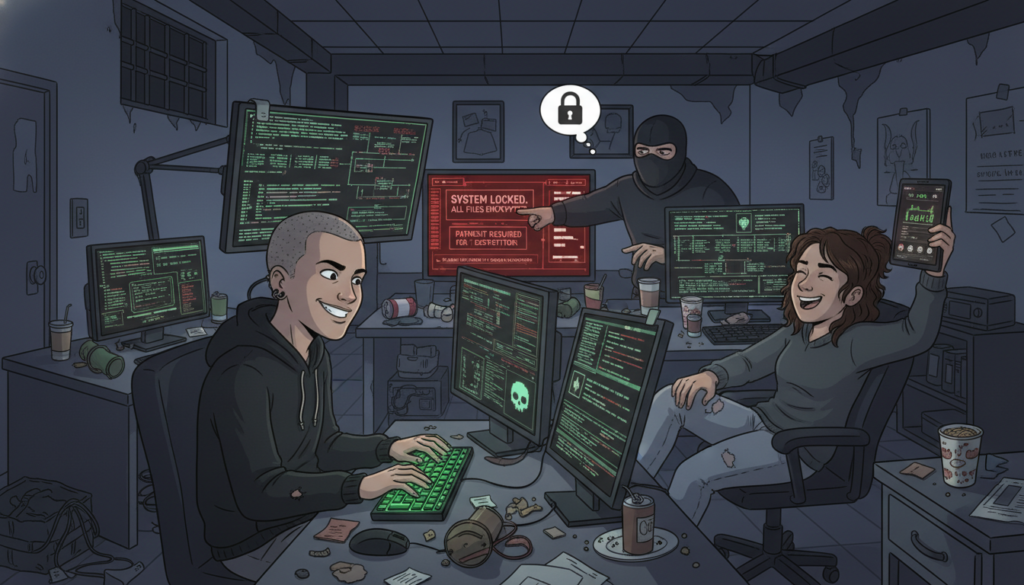
Medusa phishing campaigns succeed not because defenses are absent, but because operational environments are complex.
Common weaknesses include:
- Overloaded email review processes
- Inconsistent user training
- Legacy remote access exposure
- Excess admin privileges
- Weak alert escalation paths
Attackers don’t need universal failure — they need one weak path.
And phishing provides exactly that opportunity window.
Defensive Measures That Actually Matter
From practical defense experience, these controls provide the highest impact against phishing-driven ransomware campaigns:
Strong Email Filtering With Attachment Detonation
Not just spam filtering — behavioral analysis of attachments.
Multi-Factor Authentication Everywhere
Especially:
- Email admin
- VPN
- Remote desktop
- Cloud consoles
User Reporting Culture
Make reporting suspicious emails easy and encouraged — not punished.
Admin Privilege Reduction
Limit how far one compromised account can spread access.
Network Segmentation
Reduce lateral movement blast radius.
Offline and Tested Backups
Backups must be both isolated and regularly tested.
Incident Playbooks
Pre-written response steps reduce reaction delay.
A Reality Check From Incident Response Cases
One of the most difficult moments in ransomware response is telling leadership that the breach started days or weeks earlier through a simple email interaction.
Not a zero-day exploit.
Not a nation-state intrusion.
Just one convincing message at the wrong time.
Medusa campaigns are dangerous precisely because they combine simple entry methods with structured post-access operations. That combination makes them both scalable and damaging.
Organizations that focus only on perimeter defenses but ignore phishing resilience are leaving a major gap open.
Final Thoughts
Medusa ransomware gang phishing campaigns are not theoretical threats — they are operational, repeatable, and actively exploited. The good news is that the initial access vector — phishing — is also one of the most preventable attack paths when layered defenses are applied.
Technology controls help. Training helps. But culture and process help just as much.
If users know how to pause, verify, and report — and if systems require layered authentication — the majority of phishing-driven ransomware attempts can be stopped before they escalate.
The first click should never be the last line of defense.

Responses (0)
Be the first to respond.